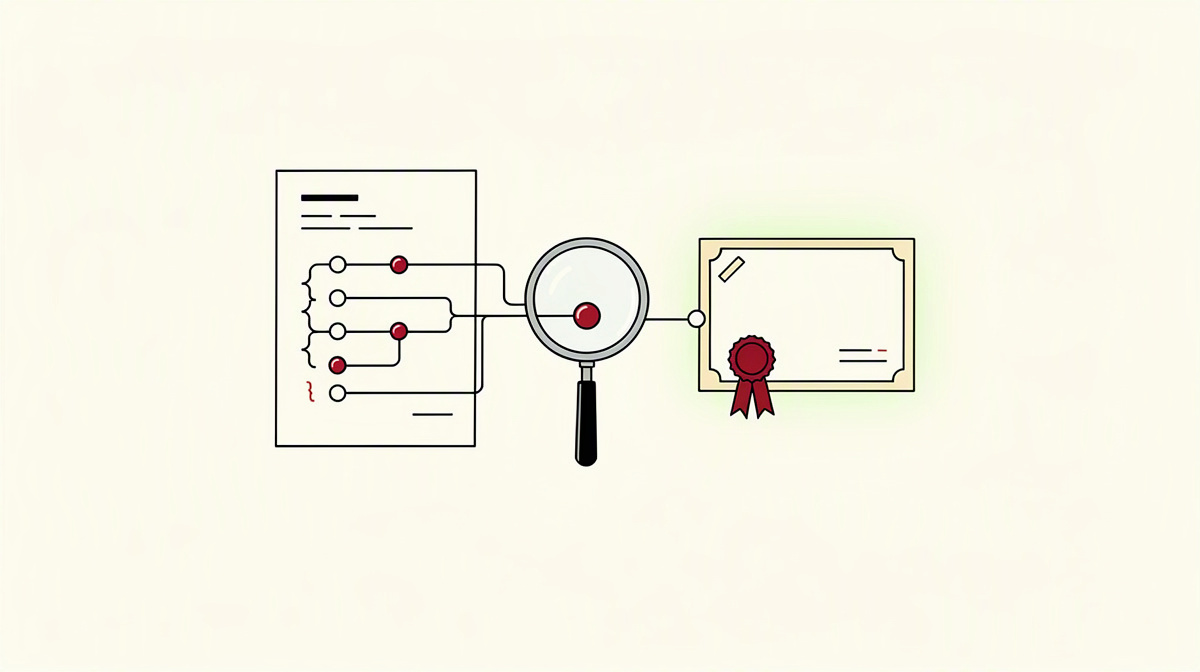
Code ownership describes who truly takes responsibility for code, not just who has worked on it. For engineering leads and technical recruiters, code ownership is a practical signal: it shows whether someone stands by decisions, makes changes traceable and thinks through their impact on the system.
This article explains code ownership from two angles: professionally as a principle of software development and operationally as something that can be identified in real work in the repository. At its core, it comes down to three questions:
- How do you recognise real responsibility?
- Which signals are reliable?
- Where do typical misinterpretations arise?
CVs, self-descriptions and individual code snippets are often not enough for this; the traces in the Git history, quality characteristics in the project and a traceable audit process are more informative.
What code ownership really means in practice
In day-to-day work, code ownership does not mean legal ownership of code. It means lived responsibility: for particular parts of a system, for the quality of changes and for the consequences those changes trigger in the project.
That responsibility goes well beyond simply writing code. It includes, for example,
- preparing decisions from both a technical and a business perspective,
- introducing changes cleanly into existing structures,
- recognising risks early,
- and considering maintainability before problems become visible.
In practice, ownership therefore rarely shows itself in a single strong contribution. It usually becomes visible over time. Anyone who truly takes responsibility leaves traceable evidence: a recognisable line through their changes, consistent contributions in relevant areas and a picture that is not made up only of isolated interventions.
It is also important to distinguish between visibility and responsibility. A high number of commits, large volumes of written lines or a convincing presence are not, in themselves, reliable proof of code ownership. Nor should ownership be confused with a heroic lone-wolf attitude. Responsibility often shows itself precisely in making changes in a way that others can understand, review and develop further.
For engineering leads, this is a useful signal when they want to assess who can develop complex areas further in a stable way. For technical recruiters, the term is particularly delicate because it is often used in hiring, but only rarely checked precisely. That is exactly where poor decisions arise.
How responsibility can not only be claimed but also demonstrated with real code is a separate question in itself.
How to recognise real responsibility in the repository
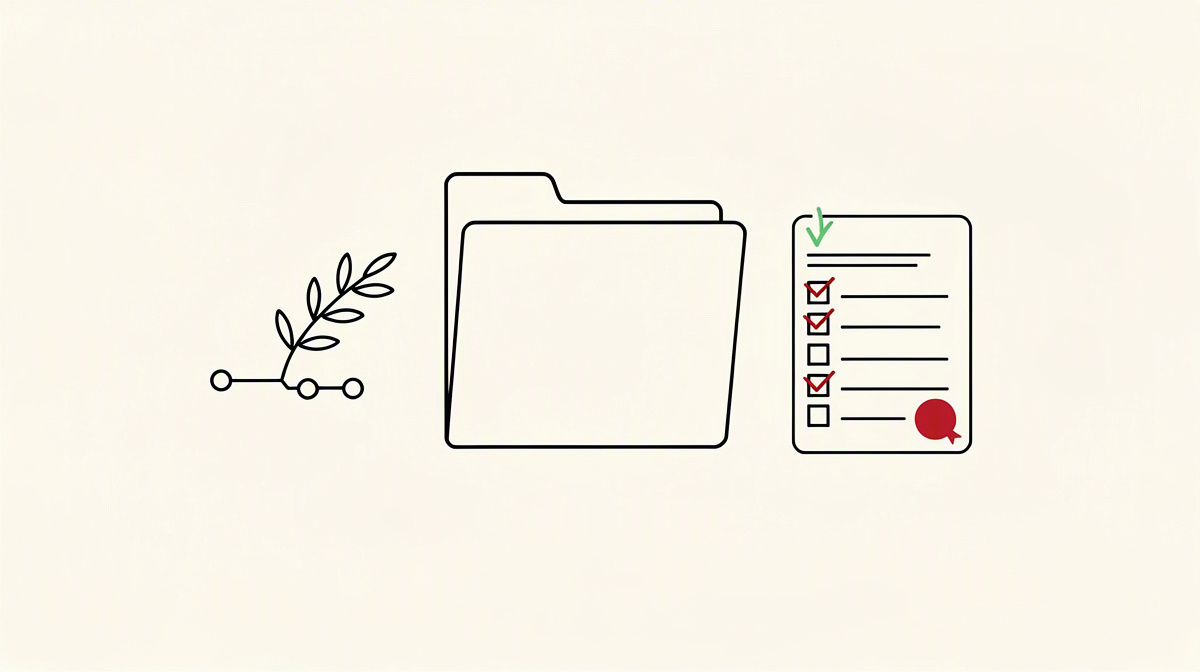
A repository is usually more informative than a CV when assessing code ownership. A CV describes stages and roles. A repository, by contrast, shows traces of real work: what changes were made, how decisions were introduced and whether a consistent contribution can be identified over time.
One central signal is authorship. What matters is not only that commits exist, but who actually wrote them and how stable that picture remains over the course of the project. Especially when it comes to whether work really originated from the person in question, forensic traces in the history are helpful. Anyone wanting to explore this further will find a useful addition in the article on recognising other people’s code.
Bulk dumps are also striking. When large amounts of code appear in blocks, without visible development and iteration, responsibility becomes harder to trace. Ownership is more likely to show itself where changes are embedded step by step into an evolved system.
An impact score is also helpful. It classifies whether contributions noticeably affect the substance of a project or remain more peripheral. This matters because ownership is not defined by a single event, but by patterns in progression, substance and traceability.
Further signals lie in the quality of the project:
- Test coverage is an indirect ownership signal because responsibility is usually linked to safeguards and changeability.
- Leaked secrets and known vulnerabilities in dependencies tend to point to gaps in diligence and security responsibility.
- The tech stack view makes visible which technologies someone has taken responsibility in.
Reviews are also part of the picture, but not as sole proof. More on this can be found in good reviews and diligence in code. If you want to assess such signals in a structured way, you will find the free repository audit on the developer page, credential verification on the company page, and an explanation of free for developers and pay-per-verify for companies under the pricing model.
Why traditional hiring signals often fall short for code ownership
Traditional hiring signals help with classification, but they answer the question of code ownership only to a limited extent. A CV, a title or a self-description provides context: stages, roles, areas of responsibility. What they do not reliably show is how responsibility was actually lived in day-to-day work.
It is similar with take-home tasks and isolated coding tests. They can show how someone solves problems under clear requirements. But they allow only limited conclusions about ownership of existing, evolved code. What is missing is the progression: how changes are introduced, safeguarded and carried over time.
Portfolio screenshots or individual repositories also often appear more compelling than they can prove. Without history and without quality context, it remains unclear
- how much of it was actually independent work,
- how consistently contributions emerged,
- and whether decisions remain traceable over the course of the project.
Code reviews also belong here, but only as one section of the picture. Good reviews are valuable, but they are not automatically proof of ownership across the entire lifecycle of a change. The distinction between review quality and comprehensive responsibility is examined in more detail in the article on good reviews.
In practice, hiring decisions often arise from scattered indications. That is precisely why a structured evaluation of real work artefacts is so important. For technical recruiters, the weaker the source material, the more strongly the interview impression shapes the judgement. For engineering leads, ownership should not be inferred from eloquence in conversation, but from verifiable traces in the development process.
How code ownership can be assessed systematically
Code ownership can be assessed systematically when the CV is not the focus, but the Git repository of a developer. That is exactly where Acquispect comes in: instead of evaluating self-descriptions, it audits real work in the repository.
The audit consists of three stages.
Stage A: Ghostwriter Detector This stage analyses the
.githistory forensically. It checks who actually authored commits, detects possible code dumps and determines an impact score. This is central to the question of ownership because it reveals not just activity, but also the origin, progression and substance of contributions.Stage B: Safety Check This stage is about quality and risk signals in the project. The Safety Check scans for leaked secrets, known vulnerabilities in dependencies, test coverage and the tech stack. This, too, belongs to the question of ownership, because responsibility is shown not only in writing code, but also in how safeguards, maintainability and security consequences are handled.
Stage C: Panel of five AI expert personas A panel of five AI expert personas — Tech Lead, Security, Performance, Architect and Craftsman — arrives at a shared verdict with a confidence score. This result is explicitly not an absolute judgement. The verdict is always communicated together with a confidence score.
For engineering leads and technical recruiters, this methodology is relevant because it brings together several layers: the origin of the work, quality characteristics in the project and a technical classification of the contributions. No single metric decides; instead, multiple signals are combined in a structured way.
Traceability is also important. Companies do not just see a compact verdict, but can follow how it was derived in the full audit log. This is crucial, especially for code ownership: trust is more likely to arise when a judgement remains explainable, rather than standing alone as an isolated score.
Verify instead of trusting blindly: how the result is shared

The result of the audit is not simply passed on as a file or screenshot. The verdict is sealed as a W3C Verifiable Credential with did:web.
What matters here is this: the credential sits in the developer’s wallet. It therefore remains in their possession and does not become a profile that others manage permanently.
For companies, verification works selectively. They verify the credential when needed and see the verdict, not the raw data from the repository. This means the underlying material does not become the verifier’s primary object of inspection. Anyone who wants to go deeper can also read the full audit log to follow the reasoning.
This is practical for hiring processes because teams receive a usable signal without having to review complete repositories manually.
The model behind it is clear:
- Developers are audited free of charge.
- Companies pay per verification.
- There is no subscription.
How the process works on the company side is explained on the company page; the model behind it on the pricing page.
Questions readers often ask about code ownership
What exactly is meant by code ownership?
Code ownership means responsibility for code and its consequences in day-to-day technical work. So it is not about who happened to touch a file at some point, but who carries changes from both a technical and a business perspective.
This typically includes:
- decisions with system impact,
- traceable changes,
- diligence around risks,
- and an eye for maintainability.
Ownership is therefore less a label than a pattern in real work. It becomes visible where contributions are consistent over time and do not occur only sporadically.
Can code ownership really be assessed fairly in hiring?
Yes, but only if self-description and interview impression are not the only deciding factors. The assessment is fair above all when the same question is asked of reliable work artefacts: what was actually done, how did it come about, and which quality signals accompany this work?
Restraint also matters here. Code ownership is not an absolute yes-or-no characteristic. It can only be assessed as a classification with context.
What role does the Git history play in assessing responsibility?
The Git history is central because it shows progression rather than claims. It makes visible
- who actually authored commits,
- whether changes emerged iteratively,
- and whether larger amounts of code suddenly appear as a dump.
These traces in particular help answer whether responsibility was carried over time or whether the picture only appears convincing on the surface.
Why are security and quality characteristics relevant to code ownership?
Because responsibility does not end with working code. Anyone who shows ownership does not work in isolation from safeguards and risks. That is why test coverage, known vulnerabilities in dependencies, leaked secrets and the tech stack are relevant signals.
They do not answer the ownership question on their own, but they sharpen the picture: diligence, changeability and security awareness are part of technical responsibility.
How can code ownership be assessed without having to disclose the entire repository?
For this, the repository can be audited without a company receiving the raw data as its primary view. Acquispect assesses a Git repository in three stages: first the forensic analysis of the .git history, then the Safety Check, and finally a panel of five AI expert personas that arrives at a shared verdict with a confidence score.
The result is sealed as a W3C Verifiable Credential with did:web in the developer’s wallet. During verification, a company sees the verdict instead of the raw data and can also read the full audit log.
Conclusion: code ownership is an assessment problem, not a gut feeling
Real code ownership shows itself in traceable work, diligence and technical impact — not in buzzwords, appearances or isolated samples. Anyone who wants to assess responsibility therefore needs a clear sequence:
- Check traces in the repository
- Classify quality signals
- Verify results in a traceable way
Acquispect fits this logic on both sides: developers can have their repository audited free of charge, and companies verify the result when needed. It is also worth looking more closely at other people’s code and authorship.