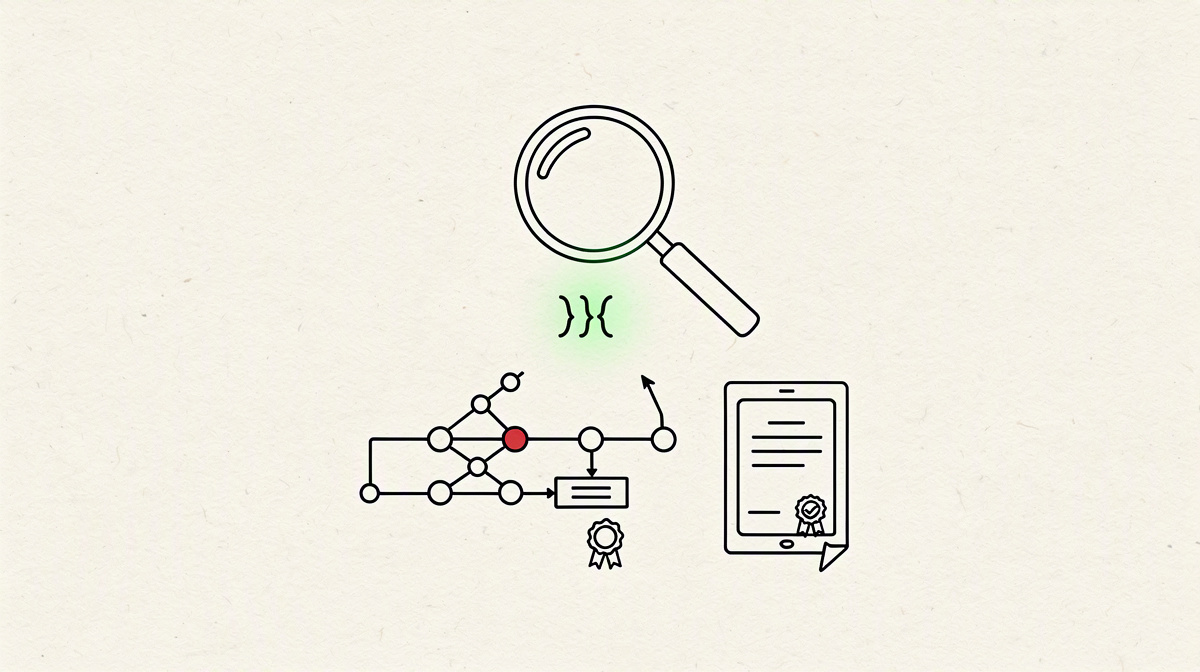
Spotting plagiarism when hiring developers is often harder than it looks at first glance: good code does not in itself show who actually wrote it. Anyone searching for “spotting plagiarism” usually wants to understand which signs can reveal code written by someone else in an application, portfolio or repository — for example in proving portfolio work with real code.
This is not about blanket mistrust, but about reliable indicators that engineering leads and technical recruiters can review before making a decision. This article provides practical guidance on that:
- typical signals in the code and in the course of the work
- a structured review using Git history, security posture and technical assessment
- additional context such as care and diligence in code
- what is free for developers, verifiable for companies and priced in the model
Why good code is not yet proof of original work
Spotting plagiarism starts with an uncomfortable insight: even very good code does not, by itself, prove that it really came from the person presenting it. A clean, working snippet can come from very different sources, for example:
- previous teams
- public repositories
- tutorials or sample projects
- third parties who helped write it
This is exactly where a common hiring mistake arises. The quality of the result looks convincing, so it is quietly equated with authorship. That is not enough for technical decisions.
Especially with take-home projects, portfolios and repo links, the context in which the work was created is often missing. What you can see is the end result, but not how the solution developed step by step, which decisions the person made themselves, and how they took responsibility for later changes. Anyone assessing portfolios should therefore not just look at finished examples, but at traceable individual contribution across the course of the work.
For hiring teams, then, it is not only important whether a result looks good. What matters is whether it shows consistent work of the person’s own.
In this context, plagiarism is first and foremost a practical review task. You are looking for indications of missing individual contribution — not making hasty accusations. Only when several signs line up does a vague impression become a more reliable assessment.
These warning signs make third-party code seem likely
In practice, spotting plagiarism often means looking for breaks in the overall picture. A single signal is rarely enough. But if several anomalies cluster across code, history and interview, code written by someone else becomes much more likely.
One common warning sign is an abrupt break in style. For example, naming, comments, architectural decisions or typical error patterns suddenly change without the rest of the project history explaining that shift. Organic development usually leaves understandable transitions.
It also becomes noticeable when the complexity and maturity of the code shown do not match the experience described. The same applies if the code seems significantly more advanced than the rest of the project, or if the technical explanation in conversation remains surprisingly shallow at key points.
Other signs include:
- large, finished blocks of code appearing suddenly instead of emerging in small iterations
- no clear connection between requirements, commits, tests and later fixes
- commit patterns where a great deal is added in a short time without recognisable intermediate steps or subsequent maintenance
- explanations that merely repeat the code at a surface level, but offer little meaningful assessment of key decisions, edge cases, security aspects or performance implications
The course of the work is especially important. Original development often shows itself not only in the result, but in how a solution grows, is corrected and is made robust. If that trace is missing, the process looks more like adoption than work personally carried through.
Even so, these warning signs are not proof. Individual anomalies can have legitimate reasons, such as pairing, migrations, code generation or an imported starter scaffold. The assessment only becomes reliable when several signals fit together and reinforce one another.
How authorship can be checked more effectively in the repository
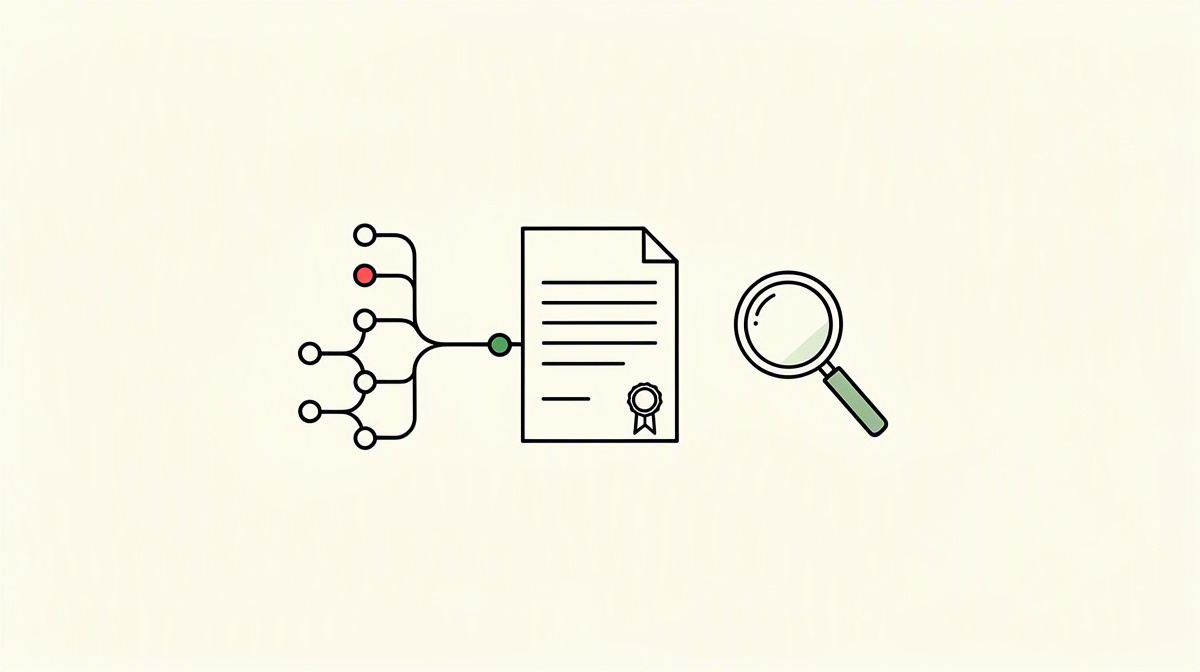
If you want to spot plagiarism, you should not start with the CV, but with the repository itself. What matters is less what is claimed about a person and more what traces their work leaves in the actual project.
Git shows far more than the current state of a file. The .git history allows you to trace the origin, sequence and involvement in changes. That level is exactly what matters for authorship, because it makes the course of the work visible instead of only the end result.
Three questions are particularly helpful here:
- Who authored the commits?
- Is authorship consistent over time?
- Did the code grow step by step, or did it arrive in the repository in larger chunks all at once?
The difference between organic development and a conspicuous code dump is especially relevant. If solutions emerge in small, understandable iterations, with visible intermediate steps and adjustments, original work usually seems more plausible. If, on the other hand, larger blocks of code appear suddenly without preparatory development, the origin requires explanation.
A forensic look at the history makes these patterns testable. It asks not only whether code is present, but how it entered the project. In hiring, this is more useful than instinct alone, because suspicion or reassurance can be tied to concrete traces.
In addition, it is not only whether someone was involved that matters, but how strongly their contributions actually shaped the repository. An Impact Score can describe the technical influence that work had on the project, instead of simply counting commits or looking at file volume.
This makes the review more tangible: not only authorship is assessed, but also how contributions came about and what effect they had. This is exactly where Acquispect Stage A comes in: the Ghostwriter Detector analyses the .git history forensically for authorship, bulk dumps and Impact Score.
Why security and quality indicators complement the assessment
Spotting plagiarism does not end with the question of whether authorship seems plausible. Even then, it still remains unclear how carefully the repository was handled and what technical standard the work shown actually reflects.
This is exactly where a security and quality check complements the assessment. Real working practice often shows itself not only in feature code, but also in accompanying technical indicators that are easily overlooked in day-to-day work.
These include above all:
- checks for leaked secrets
- known vulnerabilities in dependencies
- test coverage
- the identifiable tech stack
These signals do not answer the plagiarism question directly. But they do show how mature the state of the work is and whether the repository was handled responsibly beyond the visible functionality. A project may look strong at first glance while still containing avoidable risks, missing safeguards or noticeable gaps in technical diligence.
At Acquispect, Stage B handles exactly these safety checks: secrets, known vulnerabilities in dependencies, test coverage and tech stack.
For hiring teams, this is helpful for a simple reason: it allows them to review not only whether code might seem to come from someone else, but also how production-adjacent work was handled. Authorship and technical diligence answer different questions, but they belong together in the assessment. Only a multi-layered review turns a mere suspicion into a more grounded evaluation.
From indications to a verifiable overall verdict
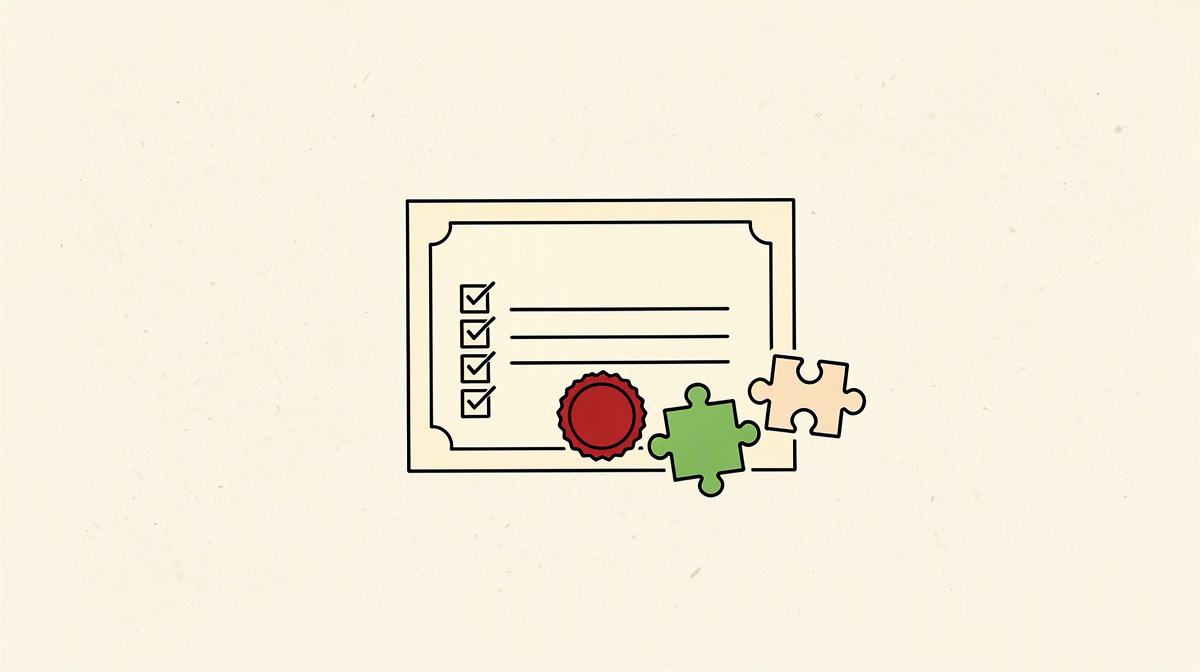
In the end, what helps in hiring is not a flood of raw data, but an understandable overall verdict that brings several perspectives together. That is exactly the aim after reviewing history, security posture and technical diligence: turning individual signals into a traceable assessment.
At Acquispect, Stage C does this through a panel of five AI expert personas:
- Tech Lead
- Security
- Performance
- Architect
- Craftsman
These personas reach a Consensus Verdict with Confidence Score. So the result is not presented as certain final truth, but as a reasoned assessment with stated confidence.
This verdict is sealed as a W3C Verifiable Credential via did:web in the developer’s wallet. The credential belongs to the developer.
Companies verify it when needed and see the Verdict rather than the raw data. If they want to understand the assessment in more detail, they can also read the full Audit Log. Verification therefore remains selective: what matters for the decision is the verdict with its reasoning, not the open disclosure of the entire repository contents.
Important for the process:
- For developers, the audit is free.
- Companies pay per verification without a subscription.
So a large number of individual signals becomes not just a gut feeling, but a reviewable verdict that can be clearly understood for developers, companies and in pricing.
Frequently asked questions about spotting plagiarism
Is a code snippet enough to spot plagiarism?
No. A single snippet shows only part of the result, not how it came about. But for the question of work done by someone else, what matters is precisely how the code was created, whether it fits the project context and whether decisions can be traced over time. Without history, you are often left with only an impression.
More helpful is the combination of:
- the code itself
- the development history
- explainability in conversation
- accompanying technical indicators
What role does Git history play if I suspect code written by someone else?
It is often the most reliable point of review. The .git history shows who authored commits, whether changes emerged step by step, and whether larger amounts of code suddenly entered the repository. That is exactly where anomalies can be examined instead of judging only by style or intuition.
At Acquispect, Stage A analyses this level forensically: authorship, possible code dumps and an Impact Score.
Are large commits always a sign of copied code?
No. Large commits can have legitimate reasons, for example a migration, an imported starter scaffold or previously completed work that was merged in. They only become suspicious when the rest of the history does not explain the change.
So what matters is not the size alone, but the context:
- are there preparatory steps?
- are they followed by fixes and maintenance?
- does the commit fit the rest of the working style?
How do you distinguish between legitimate reuse and problematic third-party work?
Legitimate reuse usually fits into the working process in a traceable way. Problematic third-party work tends to appear where origin, adaptation and responsibility remain unclear. Anyone who made their own contribution can usually explain why something was reused, how it was changed and what technical consequences it had.
Why is a Verdict with Confidence Score more useful than a simple gut-check?
Because it brings several signals together instead of overemphasising a single anomaly. At Acquispect, the Verdict comes from a panel of five AI expert personas and is issued with a Confidence Score. Companies see the Verdict rather than the raw data and can read the full Audit Log. That creates a traceable assessment, not claimed certainty.
Spotting plagiarism means checking how the work came about
The most reliable way to spot plagiarism is not through a single stylistic question, but through traces in how the work came about. What matters is whether original contribution can be recognised in the repository as coherent work.
To do that, technical decision-makers should consider several layers together:
- code quality
- Git history
- possible bulk dumps
- technical influence
- security indicators
A structured audit replaces blanket assumptions with traceable evidence from real work. In hiring decisions, that means, plainly: spend less time checking claims and more time reviewing reliable evidence of work.