
Prompt engineering for developers is a topic many recruiters and engineering leads search for because they want to determine whether strong prompts already demonstrate technical competence today or are more of a crutch. This article answers exactly that from the perspective of people who need to assess work samples, pull requests, repositories and technical developer work.
The core idea is simple:
- Prompting is neither automatically proof of skill
- nor automatically a flaw
- what matters is what becomes visible in the real development process
That includes not only code, but also traces in reviews, tickets and the issue tracker — and, as a counterpoint to mere self-presentation, also the contrast with questions in a telephone interview.
Why prompt engineering has become an assessment topic at all
Prompt engineering has become an assessment topic because large language models have long since arrived in everyday development work. Many candidates use them for drafts, explanations, refactorings, tests or documentation. That is neither unusual nor automatically problematic. But it does change what recruiters and engineering leads need to look at.
Because with tools like these, the real assessment question shifts. What matters is no longer just whether working code exists at the end. It is just as important how someone works with tools, clarifies requirements, recognises limits and checks results. A good output can come from sound technical thinking — or from skilful use of a text generator, without any deep understanding of the solution.
In that sense, prompt engineering can be a sensible part of modern knowledge work. It is similar to the skilled use of:
- debuggers
- documentation
- linters
- search tools
Here too, competence is not shown simply by using a tool, but by how deliberately and effectively it is used.
For technical roles, what remains crucial is whether someone can break down problems, test assumptions and take responsibility for code. This is exactly where a dilemma often arises in recruitment: if you let yourself be guided too much by demo effects, polished answers or plausible-sounding explanations, you confuse tool competence with dependable developer work.
If you want to focus more strongly on real artefacts instead of self-reported claims, the Proof Engine methodology is a useful frame of reference. Developers can have their repository audited free of charge on the for developers page; companies can see on the for companies page how credential verification works, and on the pricing page that developers are audited free of charge and companies pay per verification with no subscription.
Skill: What good prompt engineering can actually show
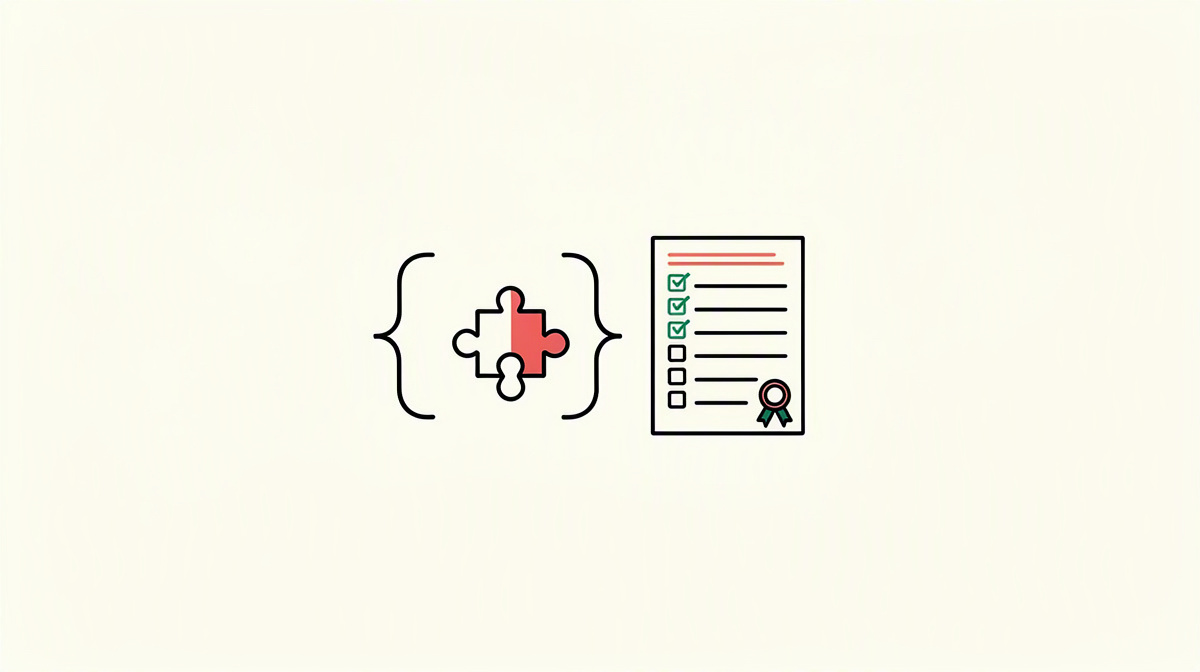
Good prompt engineering can certainly make skill visible. Not because a single prompt already proves technical quality, but because it often shows how someone thinks, asks questions and adds precision. People who formulate requirements clearly usually also identify ambiguities early. That is valuable in day-to-day development work, before misunderstandings later show up as coding errors, false assumptions or unnecessary loops.
Good prompting can also indicate structured ways of working. This includes, for example:
- breaking a problem down sensibly
- clear constraints
- step-by-step refinement
- comparing several solution paths
Patterns like these often suggest that someone is not just hoping for a quick output, but is steering a work process.
With experienced developers, the signal often lies elsewhere than many people initially assume. What stands out is not necessarily the most elaborate prompt. More telling is often whether someone critically checks results, spots gaps and adapts suggestions to real goals. These may include architectural requirements, security requirements or performance limits. Prompt engineering then shows less showmanship than judgement.
There is also a communication aspect. People who can give a machine precise work instructions often also write more clearly in tickets, reviews or technical discussions. This precision is not a side effect, but part of professional development work.
For assessors, however, one point remains important: such signals only count if they are reflected in traceable work. They only become relevant where they can be verified — in commits, reviews, tests and dependable changes in the repository.
Pull requests in particular often mark the transition from mere prompting to verifiable developer work. That is where it becomes visible whether a good instruction has also turned into a sound technical decision.
Crutch: Where prompt engineering quickly becomes a misleading signal
Prompt engineering becomes a crutch when assessors mistake verbal fluency for technical judgement. Someone who can explain AI tools well quickly appears reflective, modern and efficient. But that still says little about whether the actual development work stands up technically.
A strong prompt does not automatically prove that the generated code was understood. Nor does it show by itself,
- whether results were properly tested
- whether security risks were recognised
- whether dependencies were chosen deliberately
- whether the code was made maintainable in the long term
This can easily create a distorted picture, especially in application tasks and portfolios. With AI support, results can look very polished, even though it remains unclear how large the person's own contribution really was. Smooth wording, complete README files or clean-looking features can project more maturity than the development process actually supports.
For recruiters and engineering leads, the origin of the work therefore becomes important. What matters is not only what is in the repository, but how it came about. Was a solution developed step by step, with traceable changes, corrections and iterations? Or was larger code added in blocks, without recognisable intermediate stages?
The question of responsibility is just as central. A convincing first impression quickly loses value if basic diligence is missing. Warning signs include, for example:
- secrets committed by mistake
- outdated or known-vulnerable dependencies
- missing or neglected tests
- a work history that reveals little about genuine individual contribution
The same standard also applies in interviews. Good answers to questions about AI tools may indicate orientation, but they do not replace looking at real traces of work. So if you want to assess prompt engineering, you should not only listen to explanations, but check whether technical judgement is visible in the actual development process.
How to assess repositories fairly when AI is involved
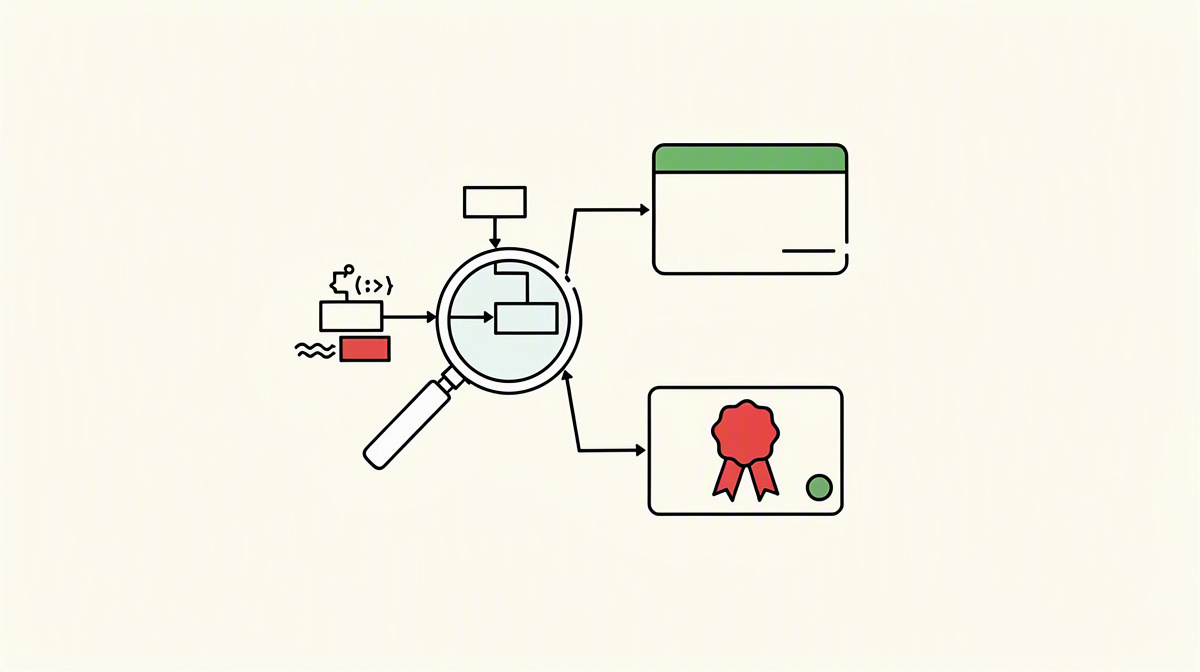
If AI assistance has become normal in development, the question “Did this person use AI?” often gets you nowhere. A fairer perspective is different: how clearly, safely and effectively can the person's own contribution be traced in the repository?
That is exactly where Acquispect comes in. Instead of assessing a CV, the platform audits real developer work in a Git repository. For recruiters and engineering leads, that is useful because the focus is not first on self-reported claims, style or presentation, but on verifiable traces of work.
The assessment runs in three stages:
Stage A: Ghostwriter Detector The .git history is analysed forensically. This centres on three questions: who authored the commits? Was code dropped in as larger blocks instead of being developed in a traceable way? And what impact did the work have?
Stage B: Safety Check This stage checks whether secrets were leaked, whether there are known vulnerabilities in dependencies, what the test coverage looks like and which tech stack is recognisable.
Stage C: Panel of five AI expert personas Five roles assess the work from different angles: Tech Lead, Security, Performance, Architect and Craftsman. The panel reaches a consensus verdict with a confidence score.
This structure is relevant for assessing repository work because it moves the debate away from mere AI usage. The focus is not on the fact that a tool was used, but on whether authorship, diligence and technical soundness are visible in the project.
This view is particularly helpful with applicants whose work looks very smooth or highly polished. It separates well-presented output more effectively from dependable traces of real development work. In this way, prompt engineering is neither upgraded across the board nor downgraded across the board, but placed in the context of real repository work.
What verification instead of raw data changes for hiring teams
The audit result is sealed as a W3C Verifiable Credential via did:web in the developer's wallet. That means the proof sits neither with the platform nor with the hiring team, but with the developer.
For companies, this shifts the focus to what is needed first in the process:
- a verifiable verdict
- no direct access to raw data
- a complete audit log to follow the assessment
That is especially helpful when several people are involved in a hire. Not every team needs to immerse itself deeply in an unfamiliar repository first in order to get a consistent initial signal. Instead of interpreting raw project traces themselves, verification can create a shared starting point.
This matters for the question of whether prompt engineering is skill or crutch: what is assessed is not self-presentation, but a traceable judgement about real repository work — with a confidence score and an explanatory audit log.
The repository audit is free for developers. Companies pay per verification, with no subscription.
Frequently asked questions about prompt engineering for developers
Is prompt engineering now a distinct developer skill or just general tool use?
Both can be true. Prompt engineering is not automatically a standalone discipline, but it can be a relevant sub-skill in modern development work. It becomes meaningful where someone can give precise instructions, narrow down results, recognise contradictions and critically review outputs. For technical roles, however, what remains decisive is whether this produces dependable work rather than just a good interaction with a tool.
Should we assess candidates negatively if they use AI when coding?
No, using AI is not in itself a negative signal. It is fairer to ask how responsibly it was used. The most important factors here are:
- traceable authorship
- clean development steps instead of mere blocks of code
- no leaked secrets
- no known vulnerabilities in dependencies
- visible tests and diligence
How can we tell whether a repository shows genuine individual contribution or just well-packaged AI output?
A good signal lies in how the work came about. In Acquispect, Stage A examines the .git history forensically: who authored commits, whether code was added in bulk and what impact the work had. Stage B checks secrets, known vulnerabilities in dependencies, test coverage and the tech stack. Stage C has a panel of five AI expert personas arrive at a consensus verdict with a confidence score. That means it is not only the visible result that counts, but also how the work becomes traceable in the repository.
Is a strong GitHub profile with good results enough to assess technical quality?
Not on its own. Good results can be impressive, but they still do not say enough about authorship, security and technical soundness. A verifiable verdict is more helpful than mere raw data. With Acquispect, that judgement is sealed as a W3C Verifiable Credential via did:web in the developer's wallet. A company verifies it when needed, sees the verdict rather than the raw data, and can read the complete audit log.
Conclusion: Prompt engineering is useful, but not a substitute for evidence
Prompt engineering for developers is neither just a fashionable topic nor, in itself, reliable proof of competence. It can point to good thinking, clear requirements and sensible tool use — but no more than that.
It only becomes meaningful when AI use is visible in repository work:
- traceable
- safe
- effective
For recruiters and engineering leads, that means: pay less attention to polished wording, and more to verifiable traces. What matters is authorship, diligence and technical judgement in the real development process.