
A Python code example is a strong asset for applications and freelancer profiles when it does more than just run and actually shows how you work. It becomes particularly meaningful as a free repo audit for developers, with the Proof Engine methodology and subsequent verification for companies.
A “Python code example” is useful for applications and freelancer profiles when it does not merely demonstrate syntax, but makes your own way of working visible. A good Python code example therefore shows traceable development: commits, decisions, tests, security and the technical context.
If you are applying for jobs or looking for new clients, you should think of your Python code example as a work sample: small enough to review, but complete enough to make quality and your own contribution visible. The amount of code is not the first thing that matters, but whether someone can understand how the project came about and what genuinely comes from you.
This article fully addresses the search intent behind “python code example”, but from an angle missing in many search results: not just looking at examples, but selecting and assessing one of your own in such a way that others can draw a reliable conclusion from it. Related topics include work instead of claims, recognising real work, spotting application fraud, good interview questions with a work sample, what AI really shows about developers, release management for code quality, interpreting a reference letter, student job applications without experience and pricing without a subscription for companies.
What a good Python code example should really show
Many people search for “python code example” because they first want to see what good Python code looks like. That is a sensible starting point. But for applications or winning freelance work, a neat snippet is rarely enough. A short extract can show style, but hardly how you actually work.
This is exactly where the distinction matters: between a learning example and a work sample. A practice program shows that you have understood syntax, loops, functions or classes. A work sample shows something else: how you define a problem, build structure, handle errors, add tests and develop a small project further.
A good Python code example as a work sample should therefore send several signals at once:
- have a clear purpose
- have a readable structure
- use understandable names for functions, classes and variables
- handle errors in a traceable way
- include meaningful tests
- show visible development over time
Purpose matters more than many people think. Anyone opening your repository should quickly understand what the project is for. A small CLI tool with a clean structure can therefore be far more meaningful than many scattered files with no clear connection.
Structure also matters more than sheer volume. If folders, modules and entry points are named logically, your example does not just look tidier. It also shows that you can separate responsibilities and make it easy for others to find their way around your code.
Completeness is often more valuable than size. A small, well-maintained repository with documentation, tests and traceable commits usually says more than a large collection of scripts. Especially with a work sample, the point is not to show as much code as possible, but to give a reliable impression of how you work.
The core question is almost always this: how much of it is genuinely your own work? Anyone reviewing your code wants to assess what you personally contributed. This does not only concern the visible code, but also the decisions made along the way: what did you build first, what did you improve later, what did you discard, what did you safeguard?
That is why a repository is stronger than a pasted code block. A single extract shows only the final state. The history shows how it was created, revised and shaped by technical decisions. Only then does it become clear whether a project has grown over time or whether a finished state was simply dropped in all at once.
Typical suitable Python work samples include:
- a small API
- a CLI tool
- an automation project
- a data processing workflow
- a small web project
- a library with a clearly defined purpose
Usually less suitable are:
- individual files without context
- copied tutorial projects
- large third-party contributions without clear labelling
- unfinished dumps with no history
So if you are searching for a “python code example” in order to choose one of your own, do not simply pick the flashiest code. Choose the work sample that most clearly reveals your decisions, your contribution and how you approach quality.
How to assess your Python repository before an application
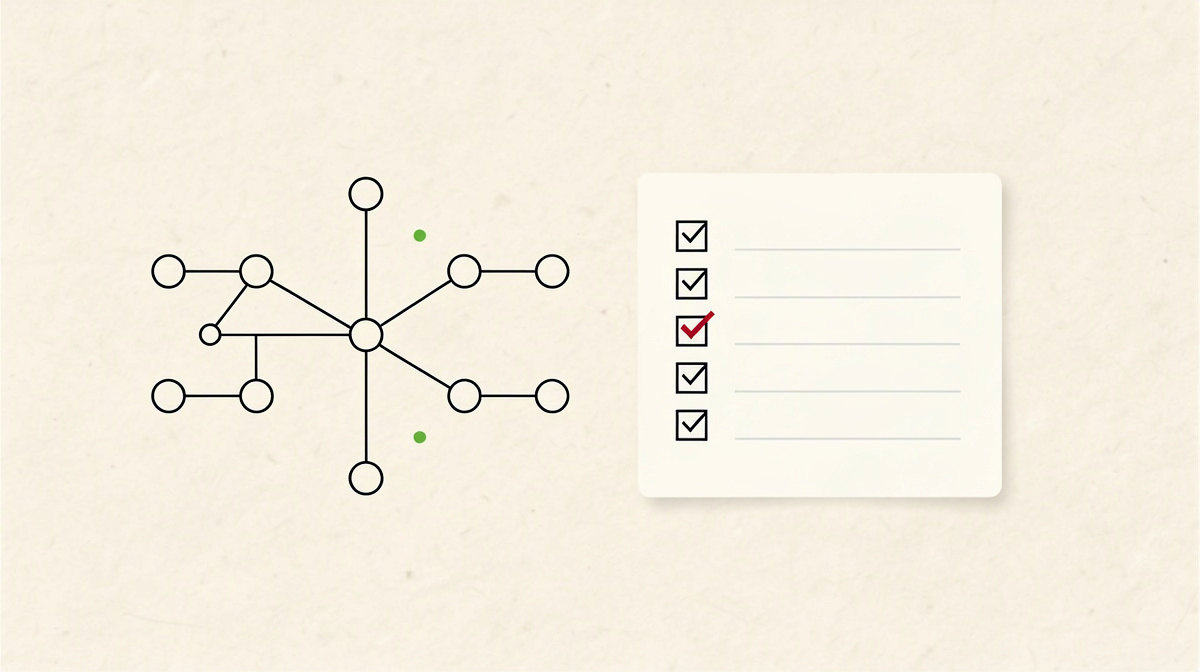
Before you include a Python repository in an application, a freelancer profile or a conversation, a brief self-check is worthwhile. Do not ask yourself whether your project is perfect. What matters more is whether someone unfamiliar with it can understand within a few minutes what the project does, how to start it and why it exists at all.
If those three points are not quickly clear, even tidy code will feel difficult to assess. Many good work samples lose impact because the context is missing. That is precisely why your repository should contain not just code, but orientation.
A README is the simplest lever for this. It does not need to be long, but it should answer the key questions:
- What is the goal of the project?
- How do you run it locally?
- How do you use it?
- What limitations or known gaps are there?
- What does the rough architecture look like?
The last point in particular is often underestimated. A short description of the main modules, layers or flows helps others put your decisions into context. If someone understands the structure, they can also assess the code more fairly.
After that, it is worth looking at the actual code quality without slipping into self-presentation. Not every small project needs elaborate patterns or many layers of abstraction. Straightforward code is often the stronger signal. Focus above all on consistency, a clear separation of responsibilities, understandable functional boundaries and avoidable complexity. If a reader can no longer tell across several files where the logic belongs, your example becomes harder to assess.
You should also judge tests realistically. No one expects every work sample to come with a huge test suite. But important paths should be covered. Good tests do not only show that something works, but how you safeguard quality. Even a few targeted tests can say more than many superficial cases.
Your dependencies matter just as much. Cleanly written application code does not leave a good impression if the repository includes known vulnerabilities in its dependencies. So check which packages you have included, whether they still make sense and whether outdated or risky versions could easily be avoided.
A particularly clear warning sign is secrets committed by mistake. Tokens, API keys, credentials or private keys do not belong in a repository. Even if they are no longer valid, they raise questions about your understanding of security. Before sharing the repository, you should therefore check specifically whether sensitive data has ended up anywhere in files, configuration or the history.
It also helps if you can explain the tech stack deliberately. State clearly which Python version you use, which framework or libraries are central and which tools you use for testing, linting or execution. Even more important than the list itself is the reasoning: why was this choice sensible for the problem?
Finally, look at the history. Meaningful commits make it visible how the project came about. They help third parties follow changes, decisions and development steps. A single bulk upload, by contrast, says very little about how you work. Especially for an application, the history is often part of the work sample itself.
How Acquispect reviews a Python code example as real work
Anyone searching for “python code example” will usually find explanations of style, syntax or small practice tasks. But for applications and freelancer profiles, that perspective only reaches the surface. The more interesting next question is this: how can a repository be audited systematically as a work sample, instead of simply looking at a polished final state?
This is exactly where Acquispect comes in. The focus is not a CV, but a Git repository as evidence of real work. For a Python code example, that is a different standard. Instead of simply accepting claims about experience, the review looks at the signals the repository itself provides.
The first part of this review is Stage A: the Ghostwriter Detector. It analyses the .git history forensically. The issue here is not whether a project is large or small. What matters is whether the history reveals how the work came about and what share of it belongs to the developer.
Stage A looks at three aspects.
First: who authored the commits? Authorship is a central signal in a work sample. At first glance, a Python repository may look tidy and still say little about who actually did the work. If the commit history is traceable, that question becomes more tangible. This is particularly useful if you want your Python code example not just to be shown, but to be assessed as your own work.
Second: the Ghostwriter Detector looks for code dumps. This means large blocks of code that entered the repository without any visible development process. Of course, not every larger commit is automatically a problem. But for a work sample, it makes a difference whether a project grew step by step or whether only a finished state appears at the end. This matters particularly in Python projects, because small tools or services are often compact enough to be uploaded in full within just a few commits. In that case, the surface of the code says little about how the work actually came about.
Third: Stage A determines an Impact Score. This places the visible contribution within the repository in context. That is also helpful for applications and business development, because not every form of participation says equally much about how you work. Anyone reviewing a work sample wants to understand whether your contribution was rather selective or whether you visibly brought substantial value to the project.
This stage is especially relevant for a Python code example. Small projects often have an advantage: they can be read quickly. At the same time, they have a drawback: the visible code alone can easily seem too polished. A clean file or a working service does not automatically show how you work. In compact repositories, the history therefore often matters more than the surface.
After the history comes Stage B: the Safety Check. Here the main concern is no longer authorship and development steps, but risks and technical hygiene within the repository.
The Safety Check examines four areas:
- secret scanning
- known vulnerabilities in dependencies
- test coverage
- the tech stack
This also relates directly to the question of how a Python code example can be assessed as a work sample. A project may be readable and functional, yet still contain sensitive data, include risky dependencies or show very little about how quality is safeguarded. For someone trying to assess your repository, these are not minor details. They are part of understanding how you work.
This noticeably shifts the view of your Python code example. The question is no longer just whether the code looks tidy. Instead, the review examines whether its creation is traceable, whether your contribution is visible and whether the repository is technically sound enough to be read as a genuine work sample.
That is precisely what makes the difference between a mere example and evidence that can be placed in context more reliably. For applicants and freelancers, this is useful because not only the result counts, but also the trail that led to it.
How to share the evidence without having to disclose your raw material
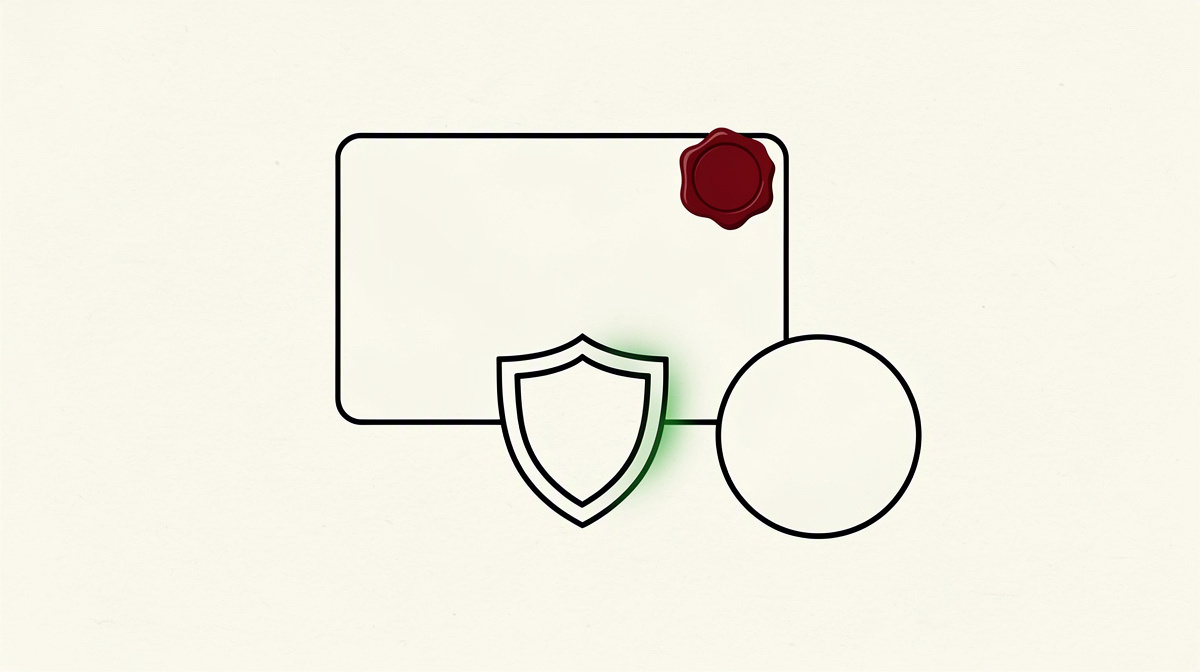
Many developers face the same tension: they want to evidence real work, but they do not want to hand over their entire repository, internal details or all raw data openly to every interested company. This applies to applications just as much as to freelance enquiries. Visibility is useful; total disclosure often is not.
This is exactly where the way the evidence is packaged and shared matters.
Acquispect seals the audit result as a W3C Verifiable Credential with did:web. This credential sits in the developer’s own wallet. So the evidence does not belong to a platform or a company, but to the developer.
Getting started is low-friction:
- sign in with a crypto wallet
- or as a guest
For you as a developer, the key point is that the evidence becomes portable. You do not have to explain the result from scratch every time or keep recontextualising your Python code example in every conversation. Instead, you can take an existing audit with you as a reusable work sample.
For the reviewing party, verification works selectively. During verification, the company sees the verdict, not the raw repository data. That is the central difference: not every file, every layer of history detail or every piece of internal context has to be disclosed immediately for an initial, reliable assessment to be possible.
At the same time, the evidence does not simply remain a black box. The assessment is made understandable through the full audit log. Anyone who wants to understand how the result was reached can read that reasoning, without this automatically becoming full disclosure of the raw material.
For applicants, this is practical because a single work sample becomes evidence that you can use in several conversations. The discussion no longer has to begin each time with the bare claim that the code shown really reflects your own work.
For freelancers, the benefit is similar, but often even more direct. In an initial contact especially, you want to build trust without disclosing your entire project straight away. Selectively verifiable evidence can help here because it shows substance without revealing more than is necessary for an initial assessment.
This turns a Python repository into more than just an example to show. It becomes evidence you can share in a controlled way.
What it costs in practice and how to get started
For developers, the audit is free. So if you want to use a Python code example as a work sample, you do not first need to budget for a paid model. The starting point is the free repo audit for developers.
For companies, the model works differently: they pay per verification, without a subscription. If a team has more extensive needs, there is an enterprise offering on request. You can find an overview of this in the pricing for the pay-per-verify model.
For you as an applicant or freelancer, what matters more is how to begin in practice. This order makes sense:
- choose a suitable Python repository
- review the documentation and add any missing context
- look at the commit history
- pay attention to tests, dependencies and possible secrets
- have the repository audited
Do not simply choose your biggest project, but the repository where your contribution and your way of working are most clearly visible. Smaller Python projects in particular are often well suited if their purpose, structure and development remain easy to follow.
It is also important to manage expectations: the goal is traceable evidence of real work. The result is not an infallible judgement, but a verdict with a Confidence Score based on the signals in the repository.
That is exactly why preparation matters so much. The clearer your Python code example is documented and the more readable its history remains, the more meaningful its later assessment as a work sample will be.
Frequently asked questions about a Python code example as a work sample
How large should a Python code example be for a job application?
Not as large as possible, but easy to review. A Python code example is helpful when its purpose, structure and development become understandable quickly. For a work sample, a small to medium-sized repository is often enough, as long as it is clear:
- what problem is being solved
- how the project is used
- how you worked on it
- how you safeguarded quality
A compact project with a clear structure is usually stronger than a lot of disconnected code.
Is a single Python file enough as a work sample?
Sometimes yes, but often only to a limited extent. A single file can show style, readability and basic understanding. For an application or freelance business development, the context is often missing. Things such as tests, dependencies, security aspects and development steps then remain hard to see. If you can only show one file, at least add a brief explanation of the purpose, usage and technical framework. It usually only becomes truly meaningful as a small repository.
What if my Python project is not yet perfect or complete?
That is not a reason to exclude it. Many work samples are not finished products, but intermediate states of real work. What matters is that the current state can be assessed honestly. You can name open points, known limitations or missing parts. For the assessment, it often matters more whether decisions, care and ongoing development are visible than whether everything has already been completed.
How do I prove that the Python code example shown really comes from me?
The strongest option is a repository with a traceable Git history. That is exactly where it becomes easier to assess who authored commits, whether code entered the repository in large blocks and how visible your contribution became over time. Acquispect checks the .git history for this in Stage A with the Ghostwriter Detector and Impact Score. The result feeds into a verdict with a Confidence Score.
Can I show my Python repository without openly sharing all raw data with companies?
Yes, the evidence can be verified selectively. Acquispect seals the audit as a W3C Verifiable Credential with did:web in the developer’s wallet. During verification, a company sees the verdict rather than the raw data. The full audit log provides additional explanation of the assessment.
Conclusion: turning a Python code example into a reliable work sample
A Python code example for an application or business development only becomes truly strong when it is more than a loose snippet. It becomes meaningful as a traceable piece of real work.
What matters is:
- a visible personal contribution
- a readable history
- technical care
- security
- meaningful tests
- understandable context
So the decisive difference does not lie only in showing code. More important is that your repository can be reviewed and evidenced in such a way that others can draw an informed conclusion from it.
If you are applying for jobs or looking for new clients, this makes your work more meaningful without claiming more than the repository actually shows.